
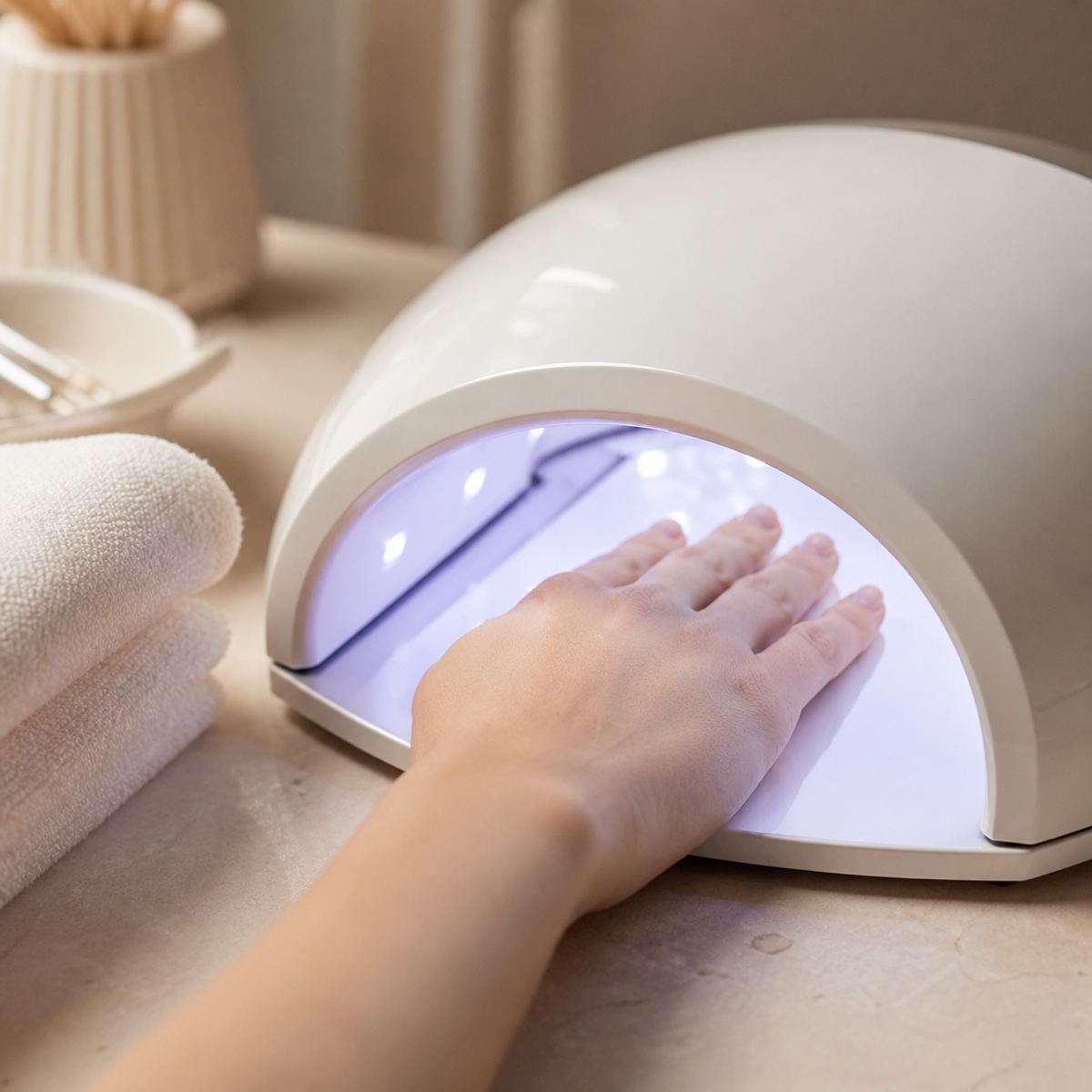
Gel manicures need light energy to cure the coating. Salon lamps are often described as “UV” or “LED”, which can sound like two completely different technologies. In practice, both types used for gel nails emit ultraviolet light; LED describes the light source inside the unit.
Why the matching lamp matters
Each gel system is formulated to cure within a particular wavelength range and exposure time. A lamp that turns the surface hard is not proof that every layer has cured correctly. Using the lamp recommended by the product manufacturer, applying thin even coats and following the stated time are central to reducing uncured material.
This is also why mixing an unverified home lamp with unrelated gel products is not a good shortcut. The British Association of Dermatologists advises users to follow the product instructions and use the recommended lamp.
What about skin exposure?
The American Academy of Dermatology suggests applying a broad-spectrum, water-resistant SPF 30 or higher sunscreen to the hands before a gel manicure. Another option is dark, opaque fingerless gloves made for UV protection, leaving only the nails exposed.
If using sunscreen, apply it in advance and keep the nail plate clean for proper product adhesion. A technician can advise on timing so that protection does not interfere with preparation.
A sensible salon checklist
- The lamp belongs to, or is approved for, the gel system.
- Coats are controlled and do not touch the skin.
- Curing times are not guessed or shortened.
- You mention any previous reaction before the service begins.
The goal is not to create anxiety around a manicure. It is to understand that the lamp is part of a complete product system, not just a convenient way to dry colour quickly.
Sources
British Association of Dermatologists · American Academy of Dermatology
This article is general information, not medical advice. If you have pain, swelling, a persistent rash or an unusual change to a nail, speak to a pharmacist, GP or dermatologist.