
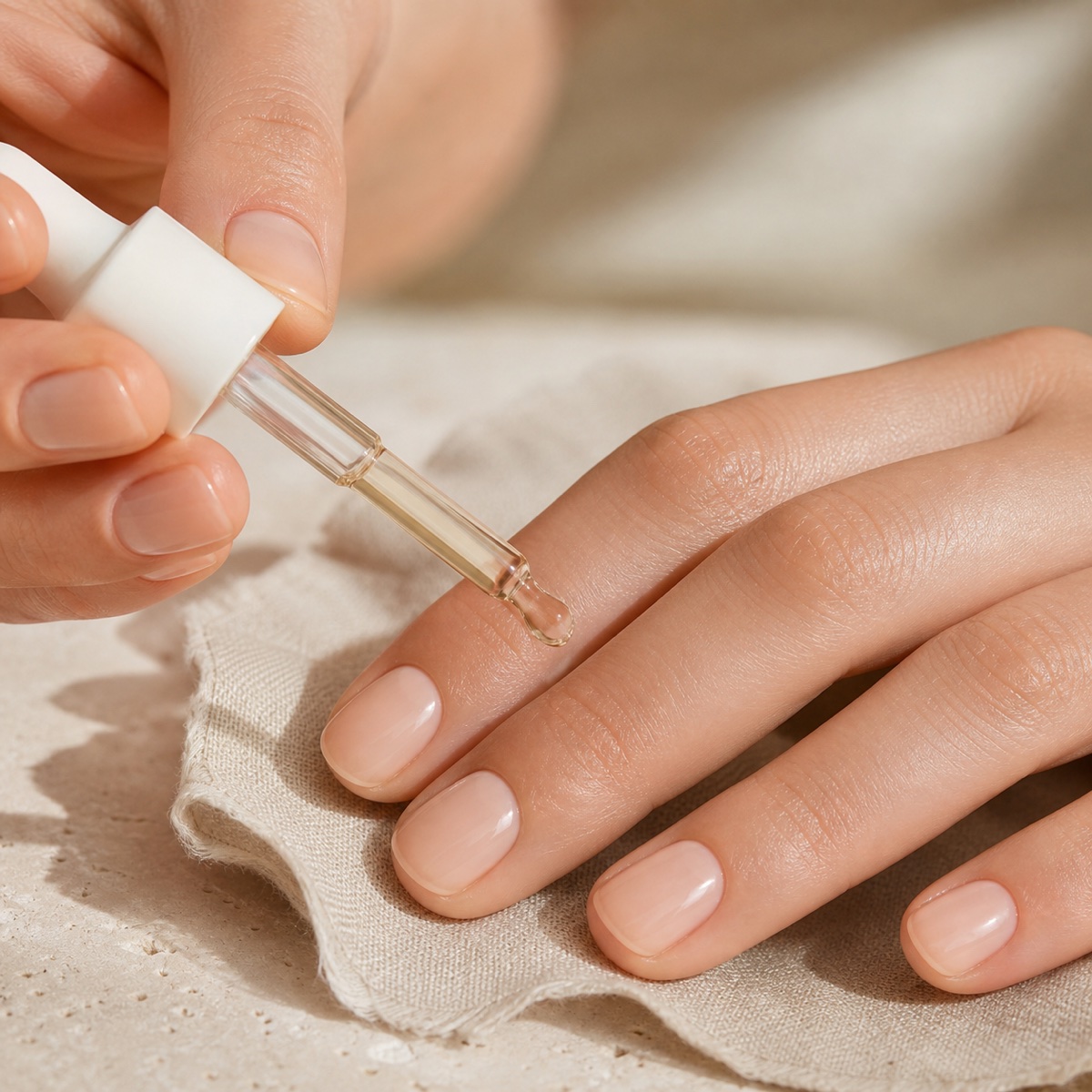
Cuticle oil is one of the simplest ways to keep a manicure looking cared for between salon visits. It does not make nails grow overnight and it cannot repair every cause of brittleness, but regular moisturising helps the nail folds and surrounding skin look smoother and feel more comfortable.
What cuticle oil actually does
The skin around the nail is exposed to hand washing, sanitiser, cold weather and household products every day. An oil or balm reduces that dry, papery appearance and helps condition the area around the nail. Flexible, well-moisturised skin is also less tempting to pick.
How to use it
- Apply one small drop around each nail rather than flooding the fingertip.
- Massage it into the sidewalls, the base of the nail and the fingertip.
- Use it after hand washing or before bed, when it has time to stay in place.
- Add hand cream over the top if your hands are very dry.
Consistency matters more than quantity. Keeping a pen or small bottle beside your bed, desk or handbag makes the habit easy.
When oil is not the answer
Persistent redness, swelling, itching, pain or separation of the nail is not ordinary dryness. Stop using new products and seek advice from a pharmacist, GP or dermatologist if symptoms continue. Oil can support a neat routine, but it should not be used to mask a possible allergy or infection.
For a polished finish at home, pair daily oil with gloves for washing up, gentle filing in one direction and avoiding the urge to use your nails as tools. The result is quiet maintenance rather than a dramatic rescue—and that is exactly why it works so well.
This article is general information, not medical advice. If you have pain, swelling, a persistent rash or an unusual change to a nail, speak to a pharmacist, GP or dermatologist.