
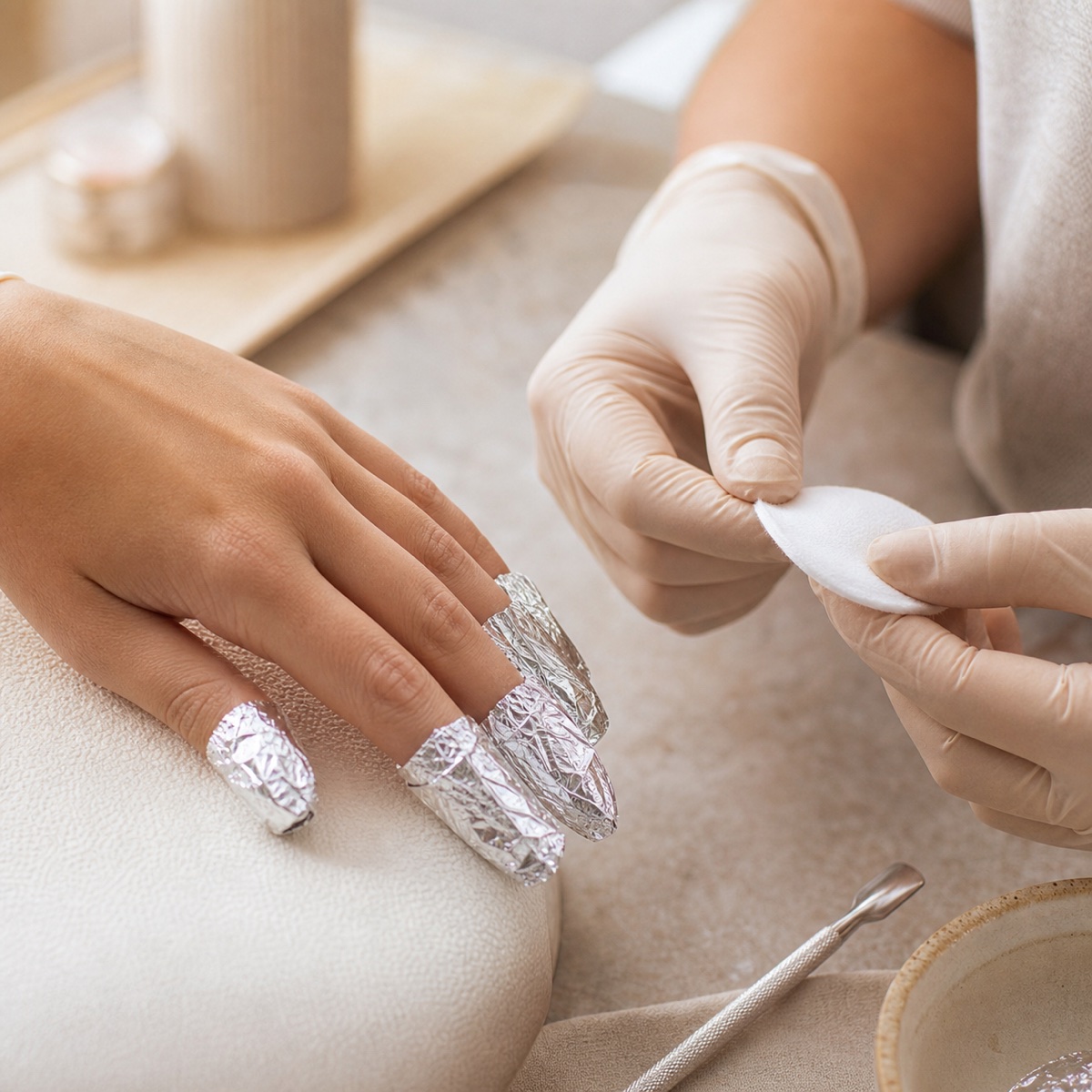
When a corner of gel polish lifts, peeling the rest can feel quick and harmless. Unfortunately, the coating may still be bonded to the upper layers of the nail plate. Pulling it away can remove those layers too, leaving the surface thin, rough and more prone to splitting.
Why lifting happens
Lifting can begin for several reasons: normal wear at the free edge, an impact, product touching the skin during application, moisture or oil left on the nail, or keeping a manicure on beyond its intended maintenance window. Picking at the edge makes the separation travel further.
What to do instead
- Do not pull, scrape or use another nail to lift the coating.
- Keep the free edge smooth so it does not catch on hair or fabric.
- Book professional removal or follow the exact removal instructions for the product system.
- If the area beneath looks green, brown, painful or unusually separated, leave it uncovered and seek appropriate advice rather than covering it again.
Soak-off gel polish is commonly removed with acetone applied to the nail using cotton and foil. Hard gel and some builder systems may require careful filing instead. This is why copying a removal method from a different product can cause damage.
After removal
Keep nails short, use hand cream and apply a simple moisturising product to the nails and surrounding skin. A temporary break from coatings may be sensible if the surface feels sore or markedly thinned.
The American Academy of Dermatology advises against picking gel polish and recommends professional removal. Beautiful nails are not just about the colour that goes on; the way it comes off matters just as much.
Source
American Academy of Dermatology: gel manicures and healthy nails
This article is general information, not medical advice. If you have pain, swelling, a persistent rash or an unusual change to a nail, speak to a pharmacist, GP or dermatologist.